
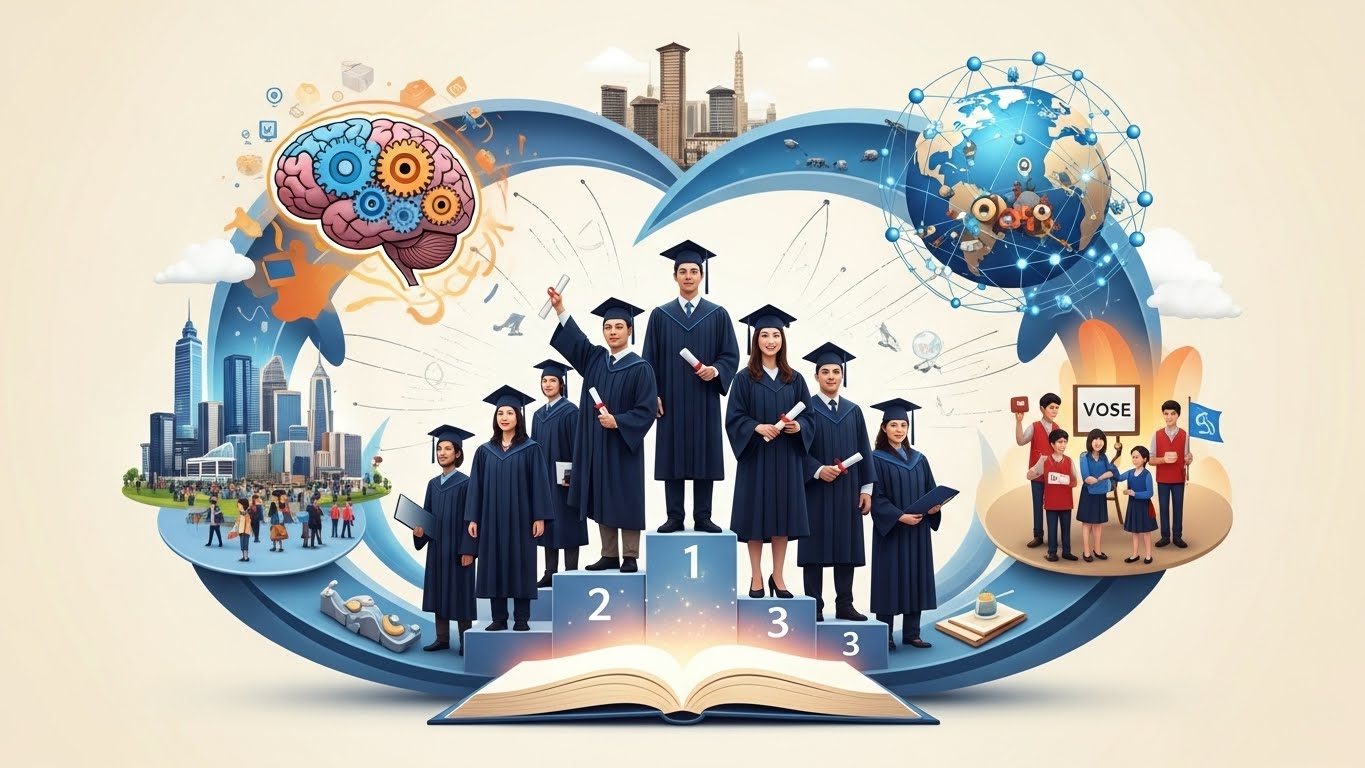
Higher education plays a crucial role in shaping individuals and societies in the modern world. In an era driven by technology, globalization, and rapid social change, higher education equips people with advanced knowledge, skills, and values needed to succeed and contribute meaningfully to society. Universities and colleges are not only centers of learning but also engines of innovation, economic growth, and social development.
This article explores the importance of higher education in modern society and how it influences individuals, economies, and the world at large.
1. Enhancing Knowledge and Specialized Skills
One of the primary purposes of higher education is to provide advanced and specialized knowledge in various fields such as science, technology, medicine, business, and humanities. It allows individuals to gain a deeper understanding of their chosen disciplines and develop expertise.
Higher education also helps students:
- Learn complex concepts and theories
- Apply knowledge to real-world situations
- Develop analytical and research skills
This advanced learning prepares individuals for professional careers and lifelong learning.
2. Career Development and Employment Opportunities
In modern society, many careers require formal qualifications and specialized training. Higher education increases access to better employment opportunities and improves job security.
Graduates often benefit from:
- Higher employability rates
- Better-paying jobs
- Opportunities for career advancement
Employers value higher education because it demonstrates discipline, problem-solving ability, and professional competence.
3. Economic Growth and National Development
Higher education contributes significantly to economic development. A skilled and educated workforce boosts productivity, innovation, and competitiveness in the global economy.
Countries with strong higher education systems experience:
- Increased innovation and research output
- Growth in industries and technology
- Higher national income and living standards
Universities also support entrepreneurship by encouraging research-based startups and innovation.
4. Promotion of Critical Thinking and Innovation
Higher education encourages independent thinking and creativity. Students are trained to question ideas, analyze information, and develop solutions to complex problems.
This focus on critical thinking:
- Drives scientific and technological innovation
- Supports evidence-based decision-making
- Helps societies adapt to change
Innovation developed in universities often leads to advancements that improve quality of life.
5. Social Development and Civic Responsibility
Higher education plays an important role in building informed and responsible citizens. Educated individuals are more likely to:
- Participate in civic activities
- Understand social and political issues
- Promote equality, justice, and human rights
Universities foster values such as tolerance, ethics, and social responsibility, contributing to more inclusive and democratic societies.
6. Reducing Poverty and Social Inequality
Access to higher education can help break the cycle of poverty. By providing individuals with skills and qualifications, higher education increases income potential and social mobility.
When educational opportunities are expanded:
- Economic gaps are reduced
- Marginalized groups gain better opportunities
- Social equality improves
Scholarships, financial aid, and inclusive policies play a key role in making higher education accessible to all.
7. Technological Advancement and Digital Skills
In the digital age, higher education is essential for developing technological skills. Universities train professionals in fields such as information technology, engineering, artificial intelligence, and data science.
Higher education helps individuals:
- Adapt to technological change
- Use digital tools effectively
- Contribute to innovation in emerging fields
This ensures that societies remain competitive in a technology-driven world.
8. Global Awareness and Cultural Understanding
Modern society is increasingly interconnected. Higher education promotes global awareness by exposing students to diverse cultures, ideas, and perspectives.
This global exposure:
- Encourages cultural understanding and respect
- Prepares individuals for international careers
- Supports cooperation across borders
Universities often serve as global platforms for knowledge exchange and collaboration.
9. Personal Growth and Leadership Development
Higher education contributes to personal development by building confidence, independence, and leadership skills. Students learn to:
- Communicate effectively
- Work in teams
- Lead with responsibility
These qualities are essential for leaders in business, government, education, and community organizations.
10. Lifelong Learning and Adaptability
In a rapidly changing world, the ability to learn continuously is vital. Higher education promotes lifelong learning by teaching individuals how to research, think critically, and adapt.
Graduates are better prepared to:
- Update their skills
- Change careers when needed
- Respond to new challenges
This adaptability benefits both individuals and society as a whole.
Frequently Asked Questions (FAQs)
1. Why is higher education important in today’s society?
Higher education is important because it provides advanced knowledge, improves career opportunities, supports economic growth, and promotes social development.
2. Does higher education guarantee success?
While it does not guarantee success, higher education increases opportunities, skills, and chances of achieving professional and personal goals.
3. How does higher education benefit society?
It contributes to innovation, economic development, social equality, and the creation of informed and responsible citizens.
4. Is higher education only about getting a job?
No. Higher education also focuses on personal growth, critical thinking, civic responsibility, and lifelong learning.
5. How can higher education reduce poverty?
By improving skills and qualifications, higher education increases earning potential and helps individuals achieve social mobility.
Conclusion
Higher education is a cornerstone of modern society. It empowers individuals with knowledge, skills, and values while driving economic growth, innovation, and social progress. In an increasingly complex and interconnected world, higher education prepares people to face challenges, adapt to change, and contribute positively to their communities.
Investing in higher education is not only an investment in individual success but also in the future of society. As modern challenges continue to evolve, the importance of higher education will remain central to building a more informed, equitable, and sustainable world.